AI agents in production need permissions, not vibes
Production AI agents need scoped tools, approval gates, logs, cost limits and rollback paths before they touch real workflows.
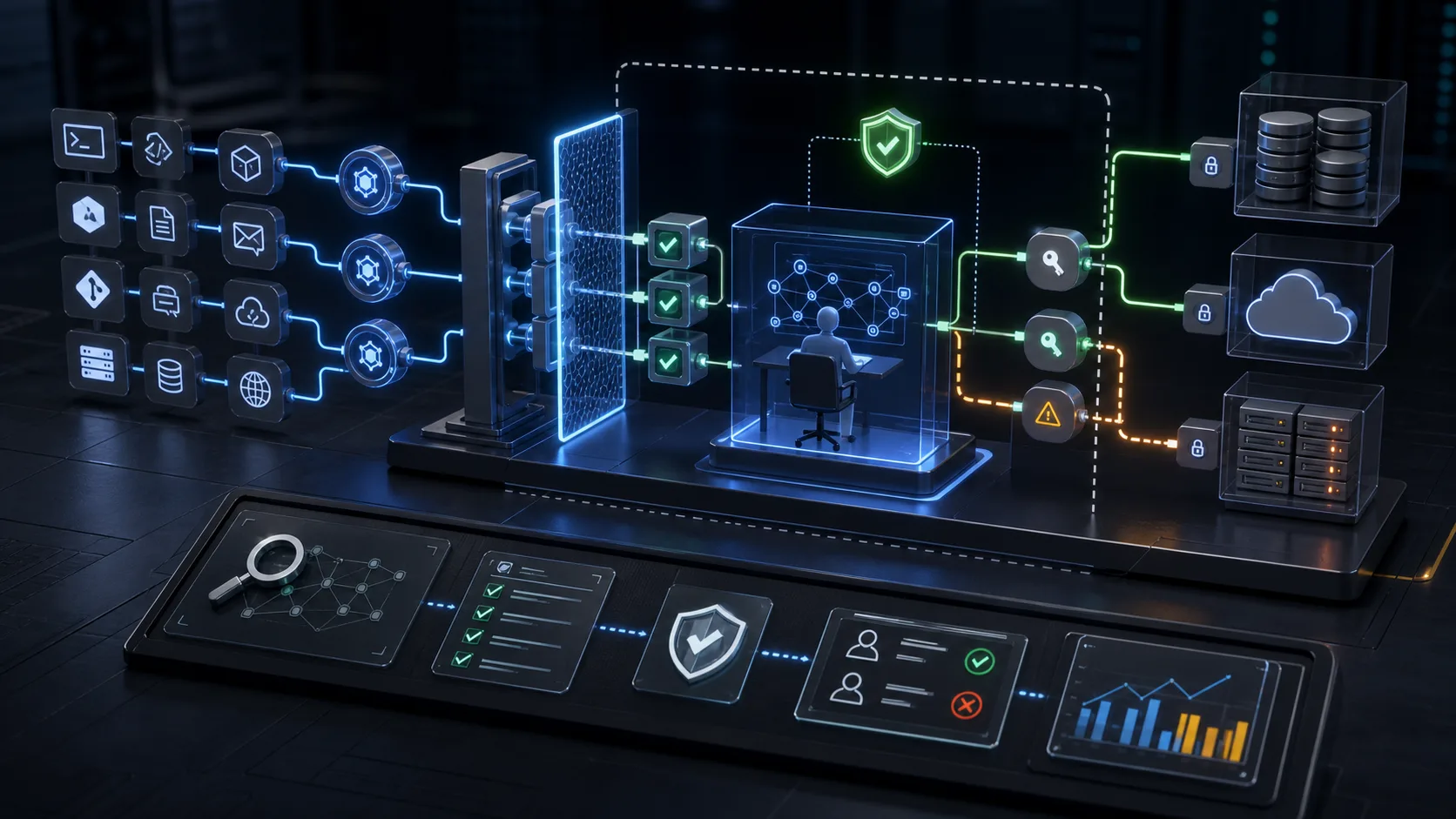
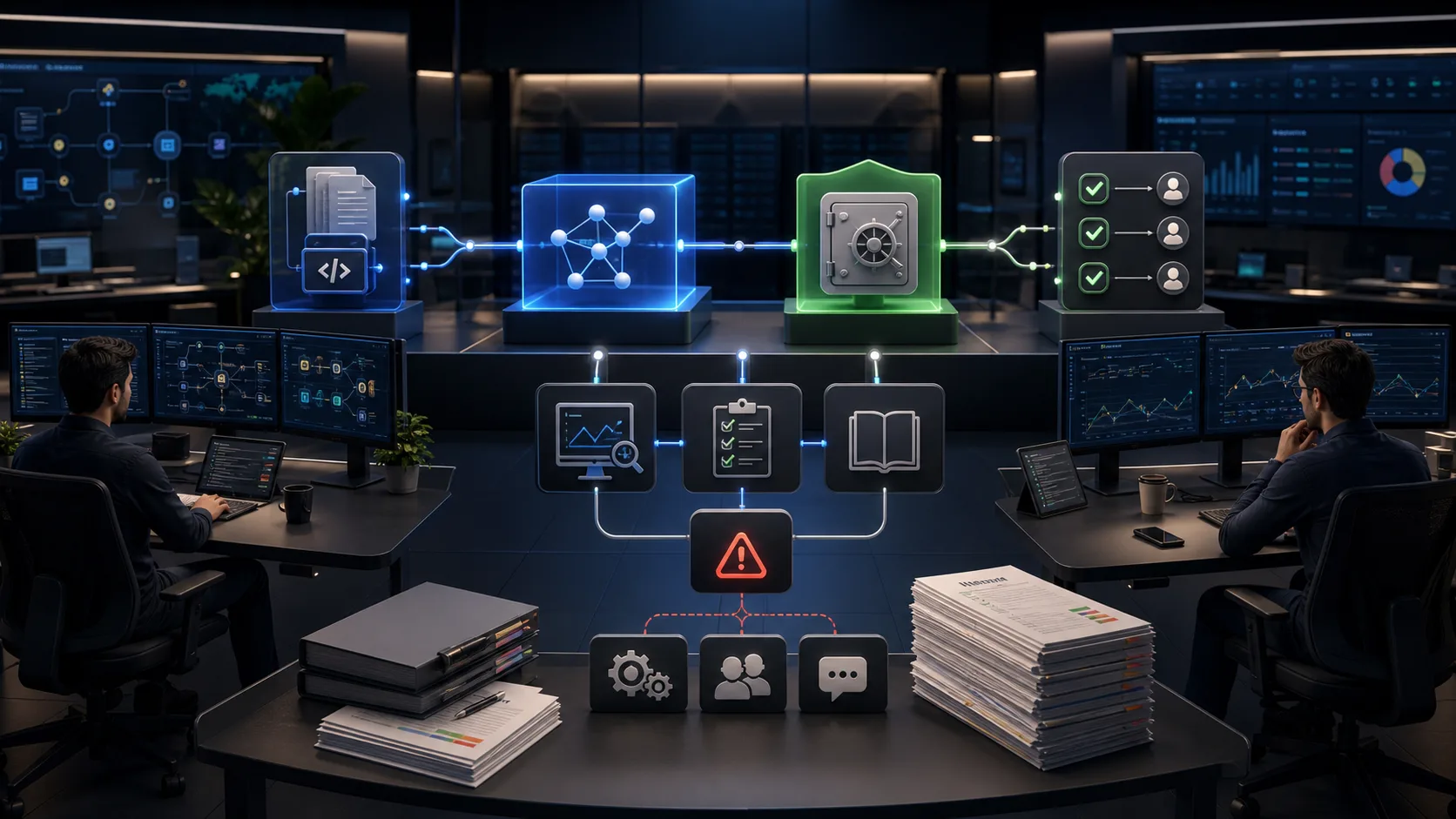
A prototype agent can feel impressive because it answers quickly and uses tools. A production agent needs a different standard. It must know what it can access, what it cannot access, who approves sensitive actions, how every tool call is logged, and how humans recover when the workflow goes wrong.
Problem
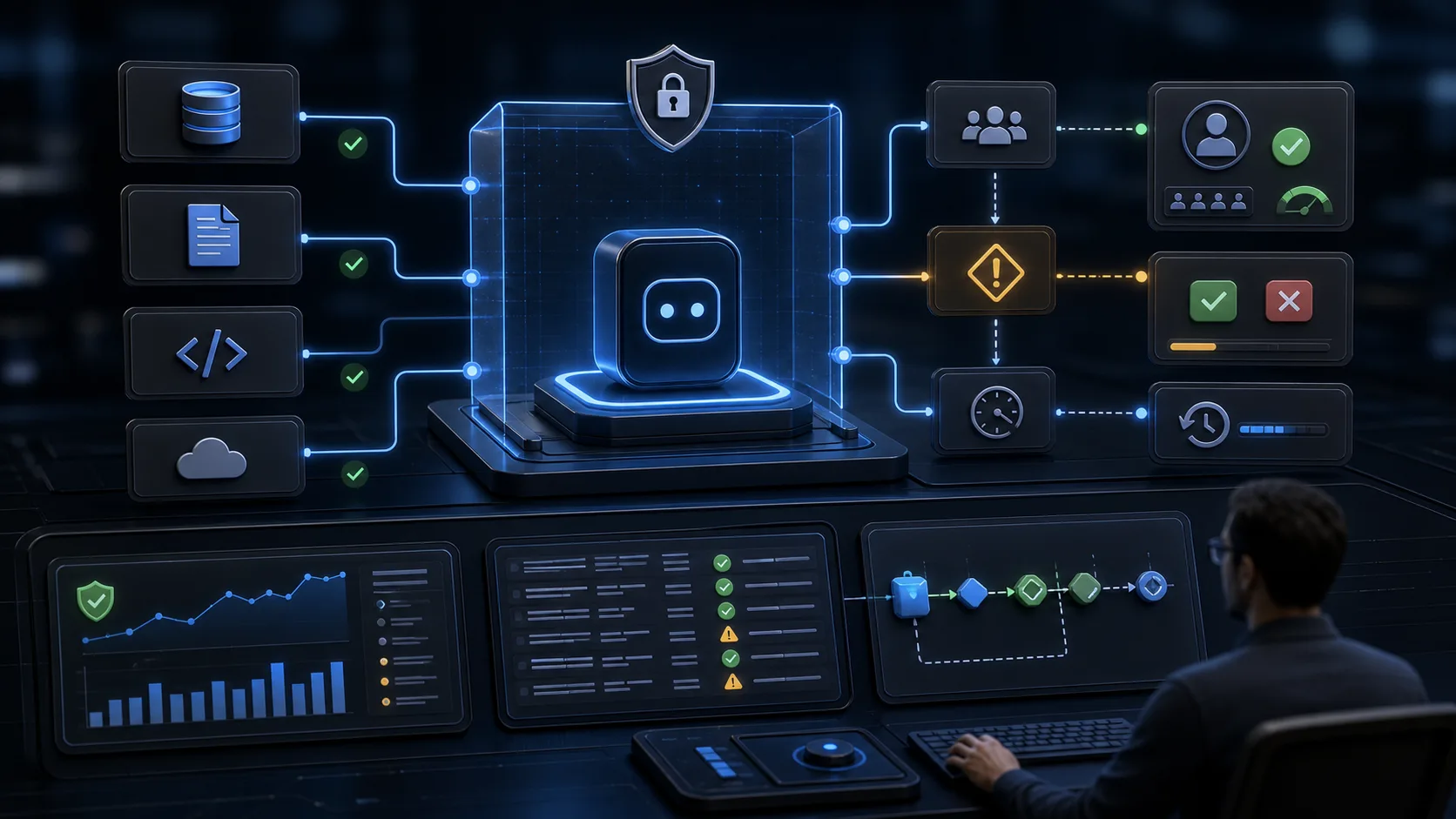
Teams often connect agents to broad tools before defining boundaries. The agent can read too much, write too much, spend too much, or follow instructions from untrusted content. Prompt quality helps, but permissions and review gates are what make the system operationally defensible.
Practical checklist
- Give every tool a narrow purpose and a named owner.
- Separate read-only tools from write or transaction-preparation tools.
- Never put secrets, API keys, passwords or production credentials in prompts or user-visible context.
- Require approval gates before irreversible, costly or security-sensitive actions.
- Log inputs, tool calls, outputs, reviewer decisions and escalation paths.
- Set cost, rate and scope limits so failure is bounded.
- Define rollback and manual override before launch.
Implementation notes
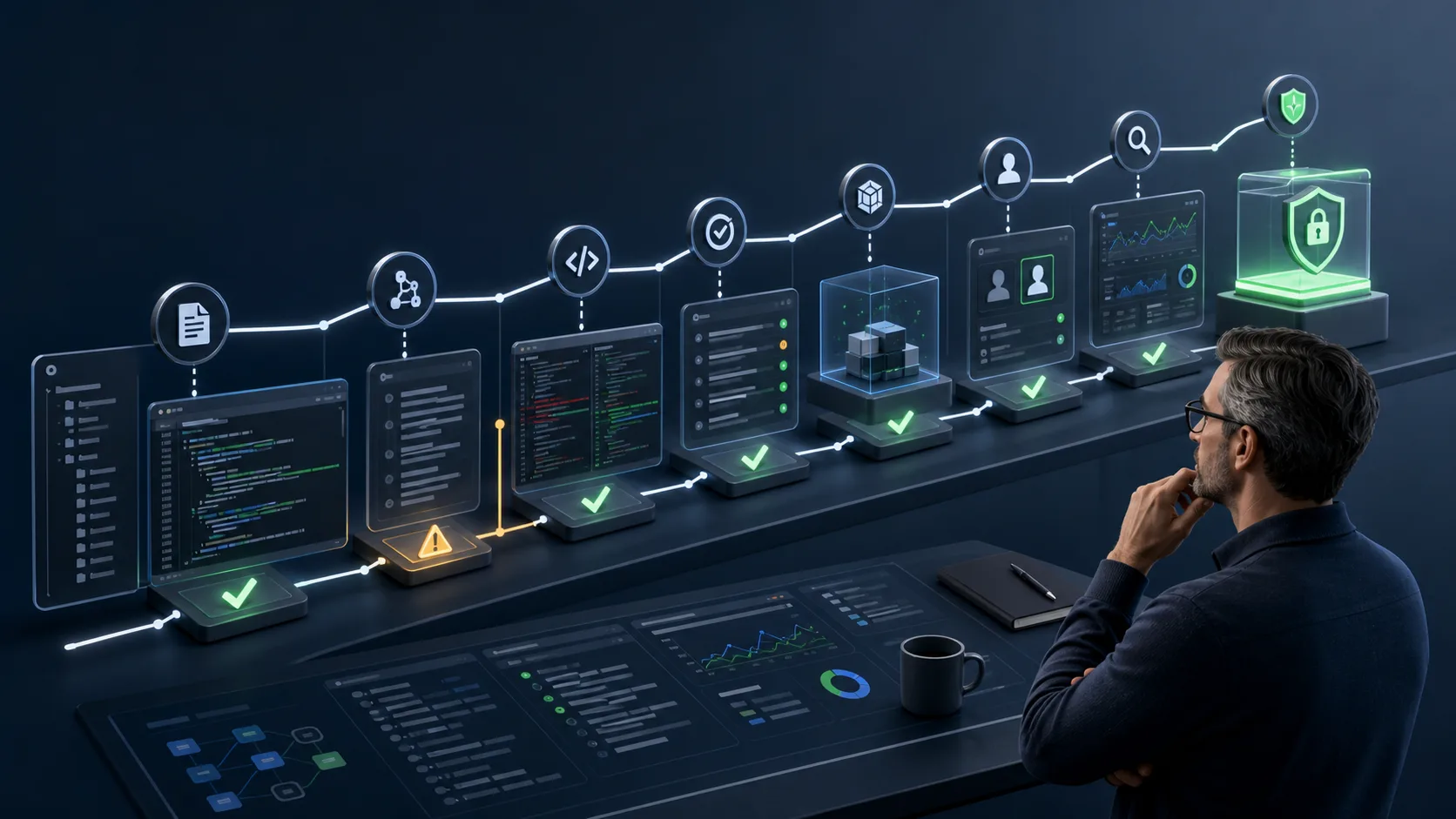
A useful pattern is to start with advisory mode. The agent gathers context and prepares a recommendation, but a human approves the action. After the workflow is stable, some low-risk steps can be automated, while high-risk steps remain explicitly reviewed.
Mistakes to avoid
- Trusting model behavior instead of enforcing permissions.
- Letting untrusted pages, tickets or documents instruct the agent.
- Skipping logs because the first demo worked.
- Using one broad API key for every tool.
- Treating human approval as a UX problem instead of a safety feature.
How Nexuain helps
Nexuain designs AI agent workflows with scoped tools, least privilege, approval gates, logs and handover documentation. The goal is useful automation without handing uncontrolled power to a black box.
Nexuain practical implication
Give agents narrow permissions, durable logs and reviewer-visible evidence. A useful agent should make approval easier to inspect, not easier to skip.
Source registry
- OWASP 2025: source used to check LLM application risks and agent tool boundaries. Nexuain interpretation: turn the reference into owners, evidence, permissions and human review.
- NIST 2023: source used to check AI risk management and governance framing. Nexuain interpretation: turn the reference into owners, evidence, permissions and human review.
- CISA 2023: source used to check secure defaults and software accountability. Nexuain interpretation: turn the reference into owners, evidence, permissions and human review.
Related blog routes
Need help applying this to your launch or workflow?
Request a technical review and we will map the safest first step.