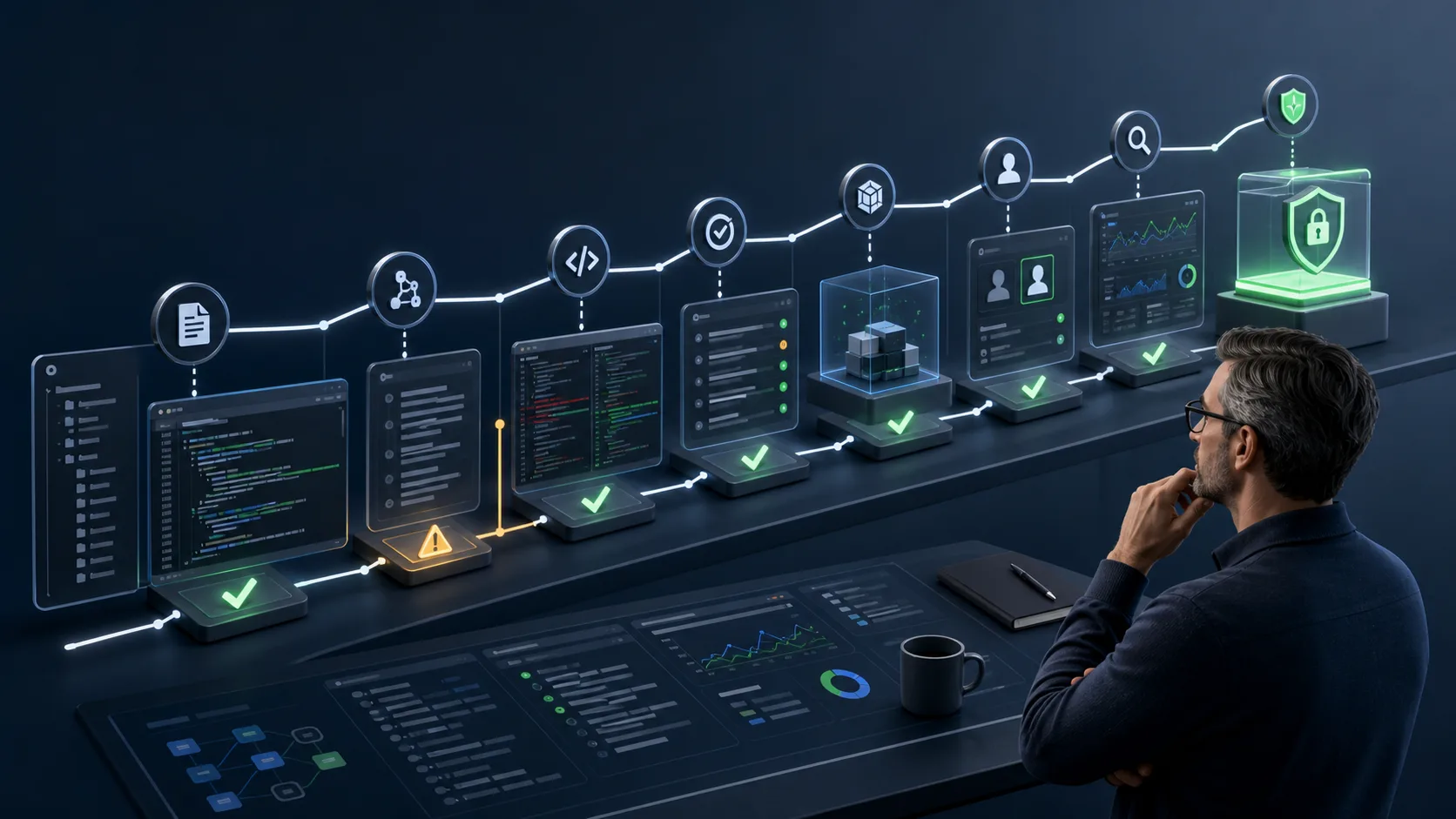
AI is everywhere, but production AI is still rare
The opportunity for senior engineers is moving AI from pilots into secure workflows with identity, approvals, logs and rollback.
AI adoption is no longer the useful signal. A team can use chatbots, coding assistants and meeting summaries all day without changing how work moves through the company. The useful question is whether AI participates in production workflows with enough control to create measurable value.
McKinsey's 2025 State of AI survey gives a good snapshot of the gap. It reports that 88 percent of organizations use AI in at least one business function, but only about one-third have begun scaling AI programs. For agentic systems, 23 percent report scaling somewhere in the enterprise and 39 percent are experimenting. In any single business function, no more than 10 percent report scaling agents.
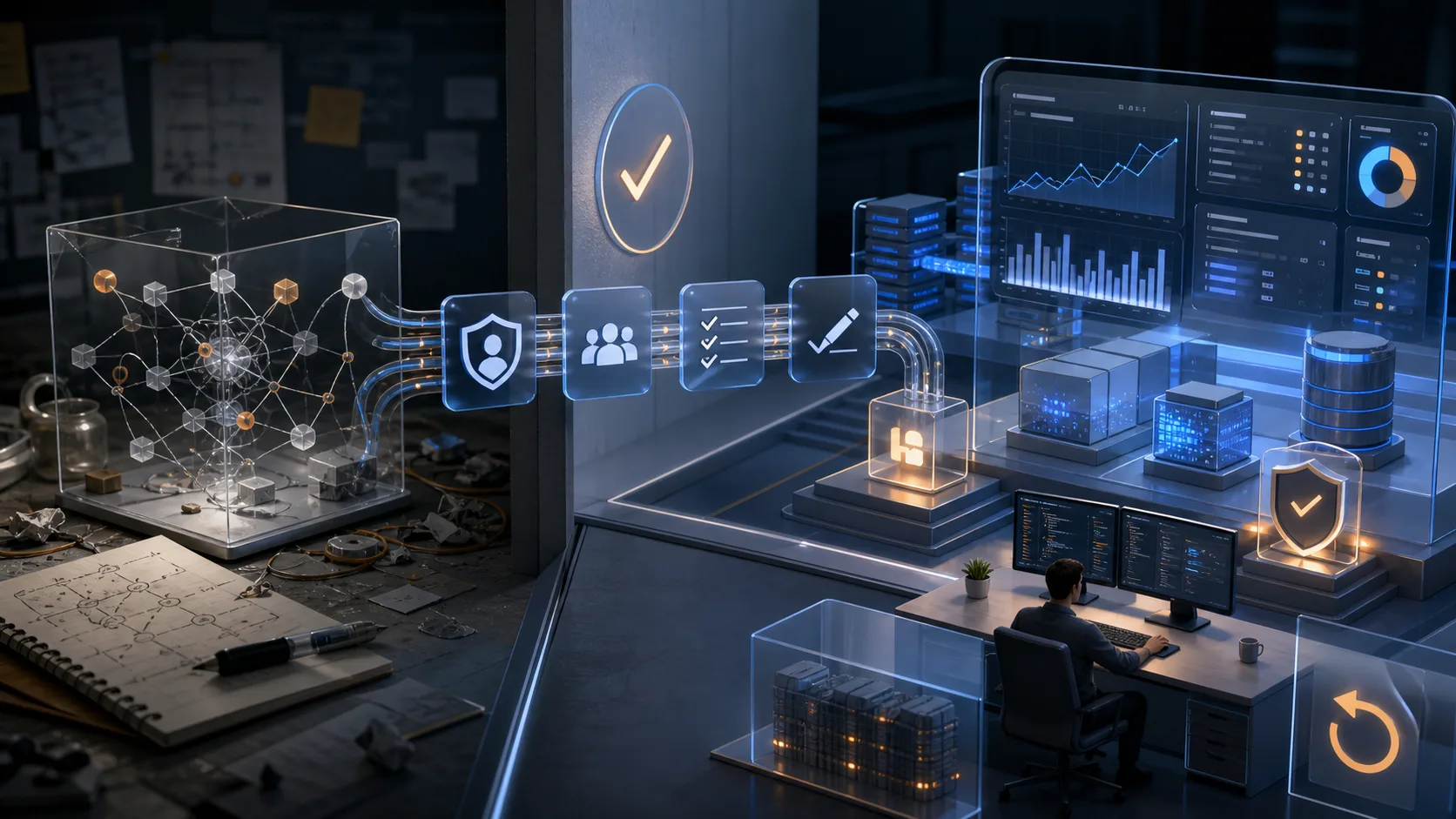
The pilot gap
The gap exists because prototypes do not have to survive production constraints. A demo can use hand-picked context, broad permissions, a friendly user and no rollback plan. A production workflow has to deal with messy data, stale runbooks, partial outages, conflicting tickets, audit requirements and people who need to know who approved what.
This is where many AI projects stall. Teams prove that the model can produce a useful answer, then discover that useful answers are not enough. The system also needs access control, tool scope, evidence, test coverage, observability, cost limits and a way to stop before a bad action spreads.
What scaling actually means
Scaling AI does not mean adding the same chatbot to more departments. It means moving one workflow from demo behavior to operational behavior: stable inputs, known owners, bounded tools, review queues, service-level expectations and a measurable baseline. The work becomes less glamorous and more useful.
A production team should be able to answer basic questions without opening the model transcript. How often does the workflow run? Which steps need human review? What percentage of outputs get rejected? Which errors repeat? How much time did the team save after counting review and rework?
- Track accepted outputs, rejected outputs and manual overrides.
- Measure cycle time before and after AI is added to the workflow.
- Separate model failure, tool failure and human-process failure in incident notes.
- Review cost per completed workflow, not only token or model spend.
Production AI is integration work
- Connect to systems of record without leaking private or operational data.
- Use identity and least privilege instead of one broad service account.
- Separate recommendation, draft, approval and execution into different steps.
- Measure the workflow against a baseline such as hours saved, defects reduced or response time improved.
- Log model inputs, tool calls, reviewer decisions and final outcomes.
- Define rollback before the agent touches production-impacting actions.
Why Web3 raises the bar
Blockchain and DeFi teams have less room for casual automation. A bad SaaS workflow may create cleanup work. A bad on-chain action can move funds, expose a key path, configure a Safe module incorrectly or publish a parameter change that governance cannot unwind quickly.
Web3 teams can still use agents, but they should start in advisory mode. Let the agent gather public documentation, compare transaction context, inspect monitor output, draft a signer brief or prepare a release checklist. Keep execution behind simulation, human approval and an audit trail.
The most useful early win is usually a review workflow, not an execution workflow. Ask the agent to assemble evidence, surface contradictions and prepare a packet a human can approve. That creates value without pretending the agent owns the operational risk.
What senior engineers should build
The valuable skill is translating a vague request like AI for DevOps into a workflow that can run. Define the actor, the context, the tool set, the approval rule, the verification gate, the output format and the failure path. If any part is unclear, keep the agent read-only until the boundary is explicit.
A production AI workflow should be boring to operate: narrow permissions, clear logs, repeatable checks, named reviewers and measured outcomes.
Further reading
Nexuain practical implication
The market does not need more AI demos; it needs engineers who can make AI reliable enough for production. AI can prepare, simulate, and explain; humans approve, sign, and execute.
Internal links
Source registry
Need help applying this to your launch or workflow?
Request a technical review and we will map the safest first step.