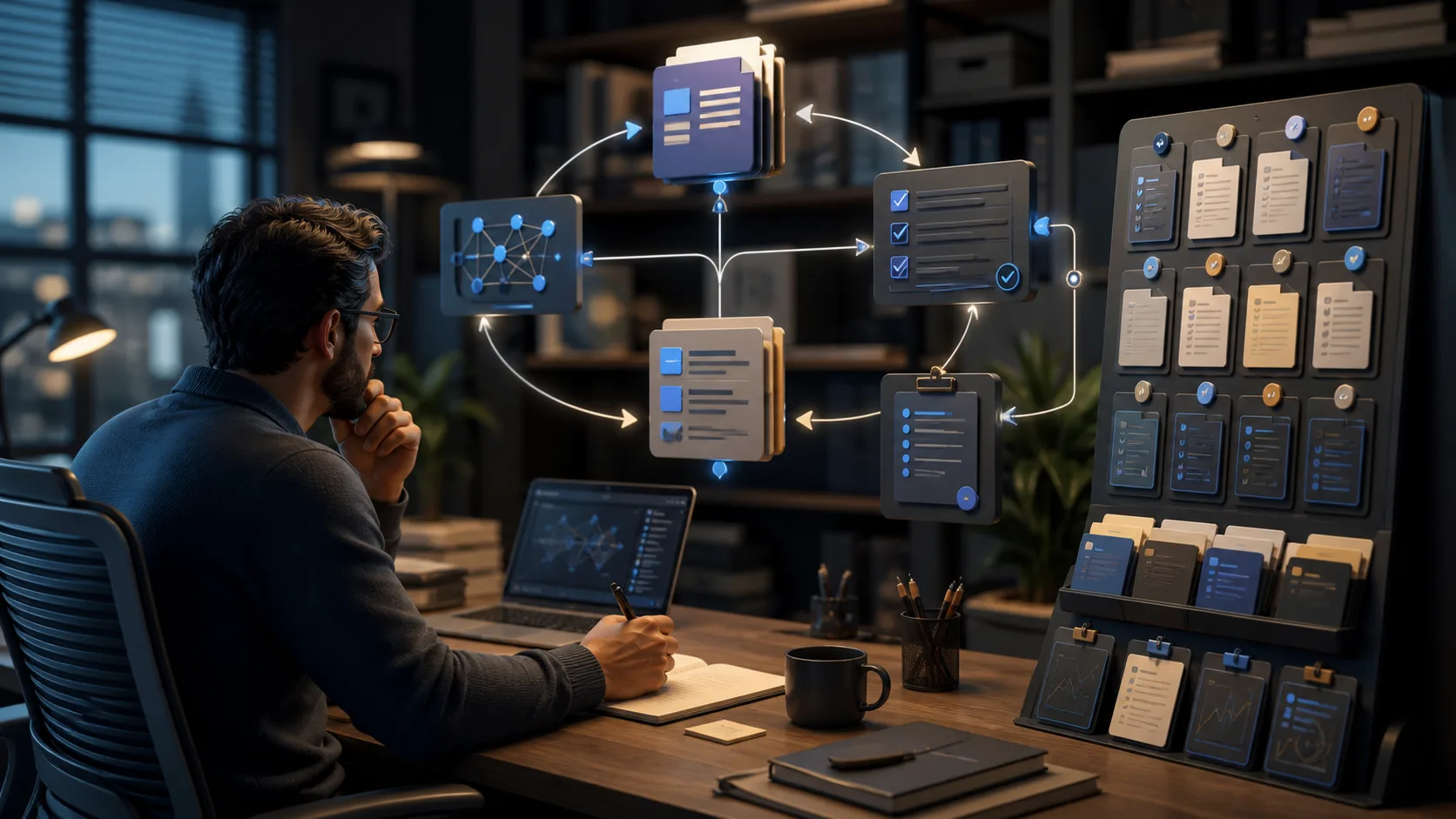
What small businesses should automate first with AI
A practical way for small businesses to choose the first AI automation workflow without buying unnecessary complexity.
Small businesses do not need an AI strategy deck before they automate one useful workflow. They need a clear pain, a safe scope, a measurable baseline and a way to stop if the automation creates more work than it removes.
Problem
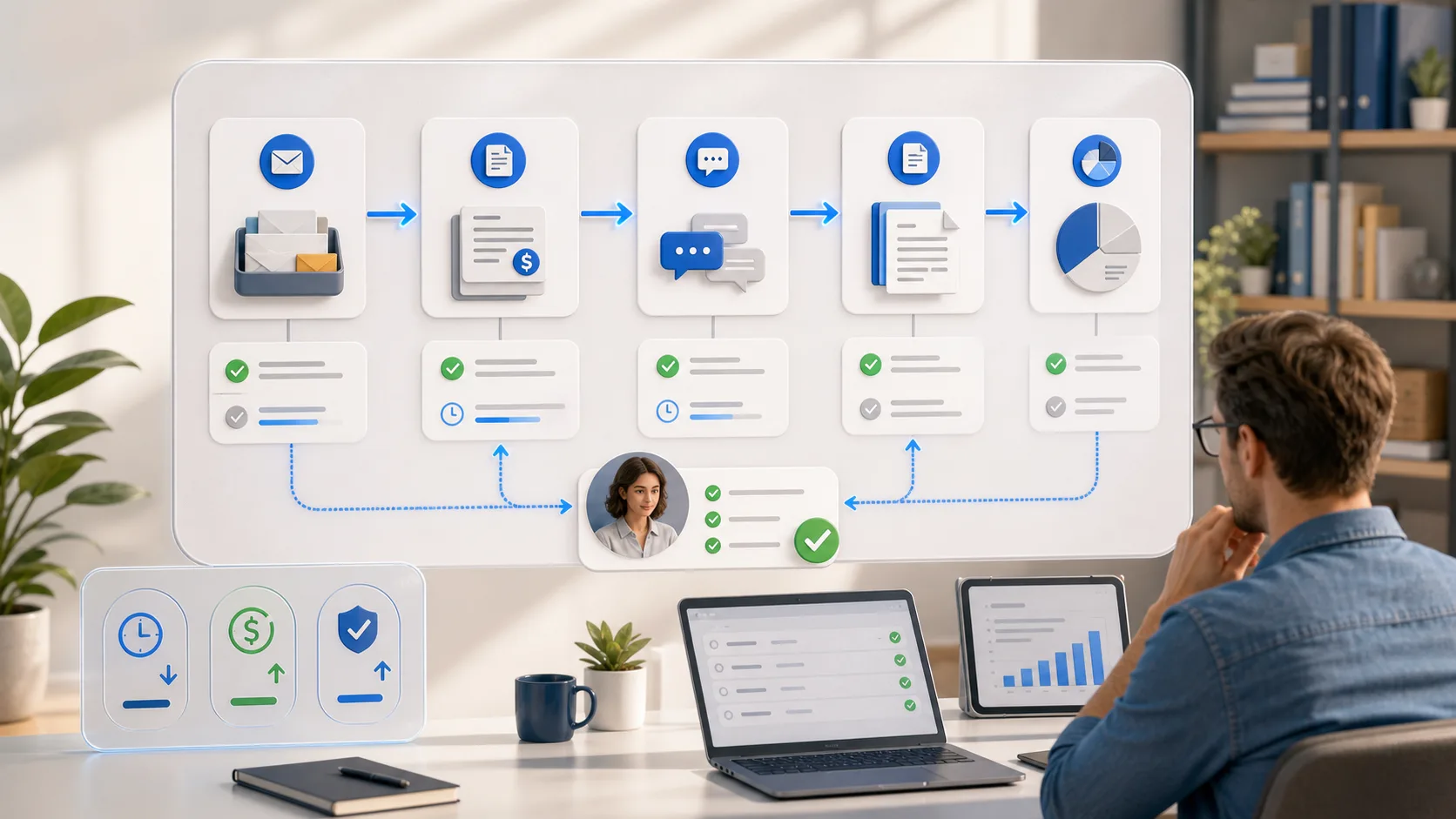
Teams often start with the most exciting idea instead of the most reliable one. That leads to broad chatbots, unclear ownership and no way to measure value. The better first project is usually narrower: intake triage, quote preparation, customer follow-up, document summaries or weekly reporting.
Practical checklist
- Choose a workflow repeated every week.
- Measure current time spent before building anything.
- Prefer low-risk work where a human can review output quickly.
- Keep the first automation connected to tools the team already uses.
- Avoid secrets and customer-sensitive data until permissions are clear.
- Define what success means: fewer hours, faster response or fewer missed steps.
Implementation notes
Start with a controlled assistant or automation that drafts, summarizes or organizes. Let people approve before sending, posting or changing records. Once the team trusts the workflow, add integrations carefully and measure whether the automation still saves time.
Mistakes to avoid
- Automating a process nobody owns.
- Choosing a workflow where mistakes are expensive.
- Building a custom tool before proving the use case.
- Skipping handover notes.
- Counting novelty as ROI.
How Nexuain helps
Nexuain helps small teams identify a practical first workflow, build a controlled automation, connect useful tools and measure whether the result is worth expanding.
Nexuain practical implication
Start with low-risk automation: intake, summaries, reminders and internal drafts. Keep approval with the person who owns the customer relationship.
Source registry
- NIST 2023: source used to check AI risk management and governance framing. Nexuain interpretation: turn the reference into owners, evidence, permissions and human review.
- CISA 2023: source used to check secure defaults and software accountability. Nexuain interpretation: turn the reference into owners, evidence, permissions and human review.
- OWASP 2025: source used to check LLM application risks and agent tool boundaries. Nexuain interpretation: turn the reference into owners, evidence, permissions and human review.
Related blog routes
Need help applying this to your launch or workflow?
Request a technical review and we will map the safest first step.